Algorithmic management is not only used to assign duties, but it's also utilized to analyse behaviour, assess staff members, and bestow rewards or penalties without any evident human supervisor. The study identifies and evaluates a contestability-based theory of the effects of digital control on employee voice and fair employment. To achieve this, a cross-sectional quantitative survey of 225 records of ride-hailing drivers and food delivery riders in the Chattogram Metropolitan Area was carried out. Reliability and confirmatory factor analysis were used to examine the data, followed by correlation, controlled regression, bootstrap mediation, conditional method assessment, and moderation. The measurement model showed good model fit, a CFI of 0.986, a TLI of 0.984, a RMSEA of 0.026, and a SRMR of 0.045. The perceived fairness was negatively affected by computational management and positively affected by contestability. Fairness expected worker involvement and fair work. The negative digital-control effect was mitigated by open challenge mechanisms, although the positive indirect benefit of fairness was significant only at low and average contestability.
Research ArticleAlgorithmic ManagementIn progress
Algorithmic Management and Fair Work: How Contestability Shapes Employee Voice under Digital Control
Correspondence: abdyeaqubi@gmail.com
Abstract
Keywords Algorithmic ManagementContestabilityAlgorithmic FairnessFair WorkPlatform WorkDigital Control
1. Introduction
Digital technology has become more than a tool for the manager and is now doing managerial tasks. Platform-based work involves software to allocate rides, track acceptance behaviour and performance, and evaluate performance. Algorithmic management places authority in interfaces, databases, models, and automated rules as opposed to a supervisor that is perceived. This digital control lies in the operational execution of those tasks, including task allocation, scheduling, monitoring and evaluation, which enable platforms to coordinate the workers in real time. (Lingayat, 2024; Veen et al., 2020). These systems impact work pace, sequence, workload, discretion, and the information available to workers. Algorithms not only are tools, but also work designers and decision makers. (Parent-Rocheleau & Parker, 2021). The shift impacts not only the organization of work, but also the concept of responsibility, as a consequence that seems to be the product of a system.
When worker behavior is controlled by automated incentives and penalties or by restrictions on worker accounts, the impact of digital control becomes more significant. If workers log in or take on unpleasant work to earn a dynamic bonus, this might ultimately lead to more opportunities being missed out on. But if they decline requests, rate low, or cancel, then this will result in fewer opportunities. Platforms can also suspend or deactivate accounts without communicating the evidence and the rule they rely on (Curchod et al., 2020; Huang, 2023). Algorithmic management also has some advantages, such as reducing waiting time, coordinating supply and demand, standardizing the decision, etc., and providing a fast feedback mechanism. Digital direction can be beneficial as assistance and forcing. (Gagné et al., 2022). Efficiency does not contradict fair work, but any benefit from automation does not mean that there is no need for safeguards in the procedures that lead to the automatic decision of entitlement to continued use of a platform or earnings.
The governance issue is one of efficiency coupled with opacity, lack of information, and human oversight. Platforms have detailed information about locations, response time, rating, cancellations, and customer interactions; workers can only be given a score, warning, restriction, or general explanation. Workers may not be able to determine the rule to be applied, the accuracy of the test data, or provide context data. There needs to be consequences for accountability and enforceable responsibility (Horneber & Laumer, 2023). Transparency isn't actionable if the information disclosed can't be reviewed or corrected (Klenk, 2023). Conditions raise concerns about fairness, dignity, and well-being as they consider the consistency of the procedures, the accuracy of the evidence, the quality of the explanations, and the respect they receive. When people do not know or can't fix the records that impact their livelihood, it affects their dignity. (Lamers et al., 2022). To this end, workers' practical capacity to participate in decisions must also be considered in fair work. Fair work must therefore be based on the practical capacity of workers to participate in decisions, in addition to their performance.
Employee voice will be important since employees have contextual information that automated systems cannot account for, such as inaccurate information, unsafe routes, unrealistic delivery times, customer abuse and evaluation errors. But it does not mean that there is a mechanism for grievances that translates to meaningful influence. By being unable to rely on formal representation, platform workers often rely on informal networks. (Collins & Atkinson, 2023). Voice is significant only when the concerns are taken up by a decision-maker who is authorized to investigate and act on them. The six elements of contestability are, therefore, notification, understandable explanation, access to evidence, clear and time-lined appeals, human review of the decisions, and correction of the decisions and downstream records. These mechanisms can be of use to an appeal, or the appeal could simply duplicate the automated result.
The model depicts perceived algorithmic fairness and contestability as separate concepts. The relationships between digital-control experiences and workers' assessments of employee voice and fair work are mediated by perceived algorithmic fairness, given that perceptions of procedure justify the influence employees have on the outcomes of automated decisions. (Babaee & Shank, 2025). Contestability is a moderating resource for the procedural process that could enhance fairness while alleviating the negative association between algorithmic management and fairness. The model thus differentiates between the perception of fair treatment and the capacity to challenge and correct consequential decisions by workers. Current studies focus on transparency, but the extent to which progress is made from notification to effective correction is not adequately measured. There has also been little integration of fairness, employee voice, and fair work in the conditional-process model in Bangladesh.
In view of these, the first major objective of the study is to investigate the effects of challenge mechanisms on perceived fairness, employee voice, and fair work amongst the ride-hailing drivers and food delivery riders of the Chattogram Metropolitan Area. The constructs are confirmed, and the indirect effect of perceived algorithmic fairness is estimated, testing the role of the contingency and conditional indirect effect. It contributes by operationalizing contestability, distinguishing explanation from effective remedy, integrating fairness, voice, and fair work within one empirical model, and extending quantitative evidence to an underexamined Bangladeshi metropolitan urban setting.
2. Literature Review
2.1 Algorithmic Management as Digital Control
Algorithmic management is a system of capturing data, decision-making based on rules or prediction, and automation of the work process. Can set tasks and priorities, check behavior and performance, determine rewards and discipline without supervision. Algorithmic management redistributes information, discretion, and authority from the organization to the workers by delegating management tasks to software (Kellogg et al., 2020). Platforms typically have behavioral records in their possession and display scores, warnings, or outcomes to workers, resulting in a lack of information for informing consequential decisions.
Research on ride-hailing, food delivery, and digital labor describes opaque matching, real-time tracking, customer-rating dependence, behavioral nudges, dynamic pricing, and automated deactivation (Curchod et al., 2020; Veen et al., 2020). Such mechanisms can enhance coordination but can also affect the speed of work and access to income, and acceptable behaviors. Their impact is on how meaningful the workers' control is over their goals, their schedules, their methods, and their performance standards. Algorithmic management can thus be perceived as helpful advice or pressure, and is not necessarily good or bad (Gagné et al., 2022; Parent-Rocheleau & Parker, 2021).
Control can also be exercised via apparent consent, in cases where compliance is necessary for income or incentives are offered in a way that seems to be voluntary. Platform rules need to be enforced through software, and must take into account customers, support persons, and the adaptations of the employees; thus, governance should include the following: Decision design; Documentation; Escalation authority; Representation (Galière, 2020).
2.2 Opacity, Fairness, and Procedural Justice
There are technical, organizational, and practical forms of opacity. Technical opacity is the case when models are too complicated for interpretation. Organizational opacity arises when there are rules that are not clearly understood; when rules change without notice; or when rules are split among interfaces. Practical opacity is when a worker has a general explanation that cannot be linked to evidence. The workers can then acquire rules either by trial and error, or by discussion with peers or by sanctions (Král & Schnackenberg, 2024; Solana-González et al., 2021).
Perceived algorithmic fairness refers to the outcomes, processes, explanations, respectful treatment, and overall treatment. Employment equity cannot be translated into a purely numerical equation as decisions in the workplace are based on rights, needs, power, and context. Transparency, however, does not necessarily lead to empowerment of workers. Information might be present but unobtainable, selectively represented in the information, or it might be used to manipulate behaviour (Klenk, 2023; Ochmann et al., 2024).
Procedural justice includes consistency, elimination of bias, accuracy, ethics, correctability, and opportunities to provide pertinent information. Organizational decisions based on AI have led to evidence that procedural justice and trust impact reactions to automated decisions (Fischman-Afori, 2025). Correctability is critical, particularly for an inaccurate location record, customer rating, and fraud flag that will impact earnings or access in real time. Safeguards are thus needed in advance of the decisions made, and in response to the remedies provided, in the context of fair procedures.
2.3 Contestability as an Organizational Capability
Contestability is the ability to question a decision and obtain a change in that decision or its effects. Unlike transparency, explanation, accountability, and human oversight, it groups these around the concept of worker-initiated review and remedy (Horneber & Laumer, 2023). An effective system consists of the following elements: Notification, explanation of reasons, access to evidence, accessible and timely appeals, review by an authorized person, and correction of the decision and downstream records. Each of these parts is dependent on the other. Notice without reasons limits understanding, reasons without evidence prevent verification, and an appeal without authoritative review may reproduce the automated outcome. Likewise, if an appeal is made without record correction, it could also have a negative impact on later allocations (Mökander & Floridi, 2022).
To be held accountable, something must be traceable, answerable, and have consequences that are enforceable. A dignity-based approach also needs to take into account the capacity of the worker to comprehend a decision, to be part of the review process, and to ask for a review if the decision is wrong (Lamers et al., 2022). Contestability should thus be understood as an organizational capacity which is cross-functional, both in terms of the various systems involved and the various aspects of data governance that are needed. Contestability is thus to be understood as an organizational capacity that requires cross-functional aspects of systems and what is required for data governance.
2.4 Employee Voice under Platform Governance
Employee voice is an opportunity to share ideas, concerns, disagreements, and information that could enhance the work or prevent harm that may not be required by management. This makes communication at platform work more complex as it can take place through templates, chats, ratings or support, and can be disputed due to spread-out workers and questionable employment contracts (Dutta et al., 2023). Voice of the platform workers emerges through grassroots networks, online communities, informal collective action and representation (Dasgupta et al., 2025). Workers also adjust to algorithmic control through learning rules, selectively complying with instructions, resisting instructions, providing information, gaming metrics, or using multiple platforms (Duggan et al., 2023; Won et al., 2023; Wu et al., 2023). These practices are signs of agency, but they don't substitute a process of review and correction of decisions with repercussions.
Digital tools create confidence and amplify voice by minimizing access hurdles and focusing concerns on decision makers (Dutta et al., 2023). But automation can also make voicing obsolete without giving voice any influence by taking voice without anyone checking if it is correct and has the authority to restore lost work and to change policy. Instead of communicating, contestability is about the effectiveness of voice. Institutional rights to technological changes are another factor that affects worker voice. Workers can help design the system before harm occurs through consultation, collective representation, access to information, and bargaining (Collins & Atkinson, 2023). Ex ante voice deals with objectives, data practices, metrics, and conditions of deployment, while ex post contestability deals with decision and remedy. There must be avenues for influence over rule-making and modification of results in order to achieve fair governance.
2.5 Fair Work, Dignity, and Well-Being
Fair work includes: Just treatment, Satisfaction at work, system-related stress not too intense, Desire to stay, Dignity, Fair-work principles. The impact of outcomes is affected by the intensity of work, levels of autonomy, predictability, and respect in algorithmic management. Predicting how well workers will feel when preferring autonomy or security and when platforms provide autonomy support, job crafting, and how these might be used to manage digital tasks and relationships, are significant for well-being (Cho et al., 2025; Felix et al., 2023; Liu & Yin, 2024).
Anxiety, mistrust, and perceptions of arbitrary treatment may occur if there are unpredictable and abusive algorithmic processes. The algorithmic management experiences also have been linked with workplace-bullying experiences (Alacovska et al., 2025). Therefore, the workers may continue to be subject to arbitrary authority without having any freedom to disconnect (Muldoon & Raekstad, 2022). Fair work needs to be protected not only through the flexibility of getting in and out, but by making sure that there are no unjust decisions.
2.6 Research Gap
Research reports the problems of opacity, information asymmetry, digital control, adaptation of workers, transparency and accountability, but it fails to be consistent in demonstrating whether effective remedies are available to workers in respect of consequent decisions. Voice research takes into account the channels that can be identified at the grassroots or technology levels, and fairness research takes into account substantive and procedural standards; however, these aspects are not often combined in one model (Klenk, 2023).
First of all, it's not clear what information is and what constitutes correction. Secondly, there is a limited amount of evidence about the conditions of the organisations where worker voice is meaningful, not symbolic. Third, the concepts of fairness, voice and fair work rarely appear along with contestability as a procedural resource and a boundary condition. The proposed framework focuses on organizational governance, corrective capacity and employment outcomes, moving beyond the focusing of technology-centered descriptions (Williams & Khan, 2025; Zhang et al., 2025).
3. Theoretical Integration, Conceptual Framework, and Hypotheses
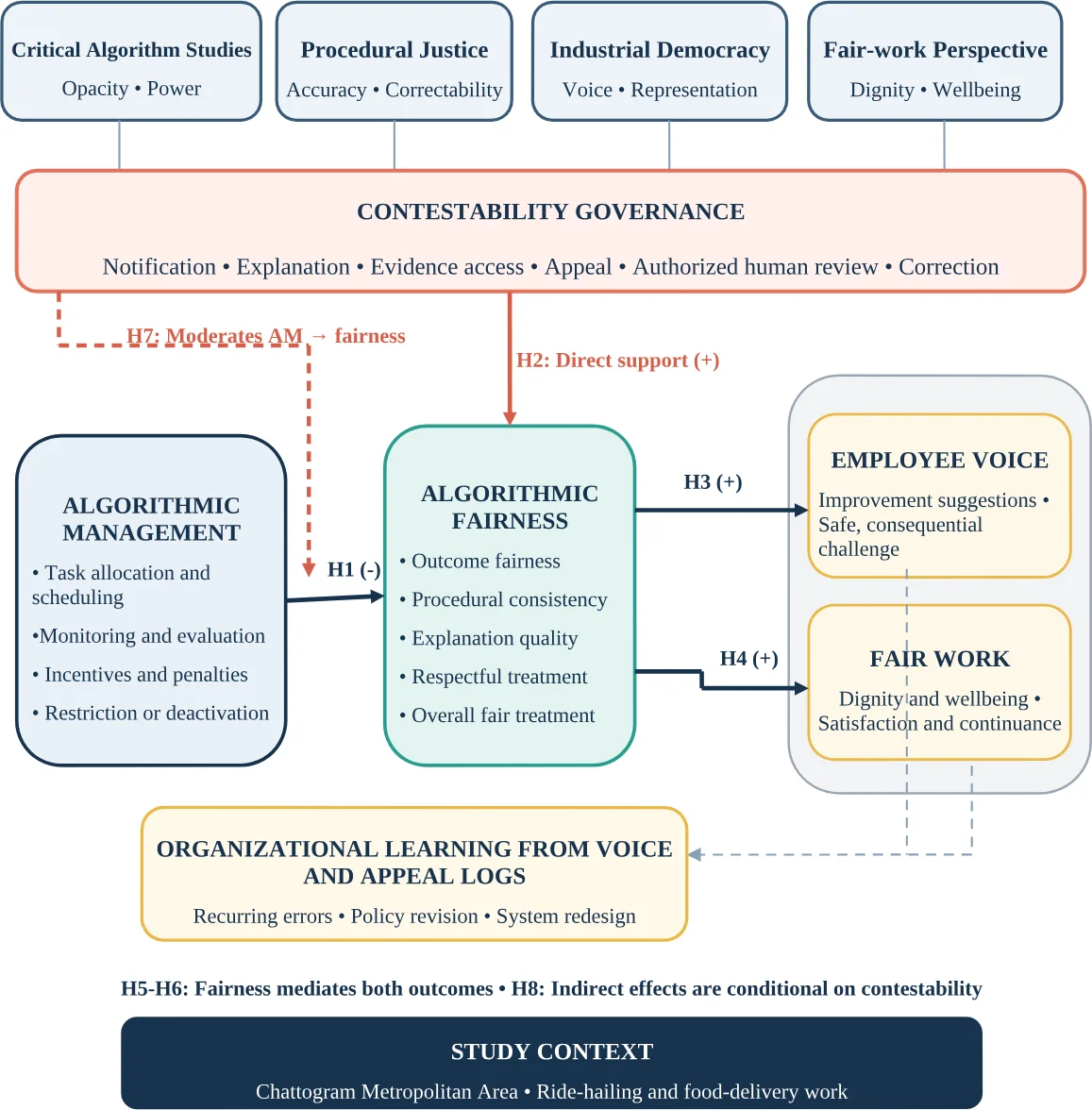
The four perspectives are harmonized in the model. The key algorithms studies find the non-transparency, information asymmetry, and the transfer of managerial authority to digital platforms (Curchod et al., 2020). Accuracy, consistency, voice, and correctability are the factors that explain procedural-justice research as to why they contribute to evaluations of fairness (Green, 2022). Industrial-democracy studies consider voice and representation to be involved in making decisions that impact work whereas the fair-work approach emphasizes dignity, well-being, and sustainable working environments (Felix et al., 2023). Collectively, these views can differentiate the strength of the algorithmic control and the quality of the governance of the same.
The integrated conceptual framework in a layered form is illustrated in Figure 1. The tested mechanism is informed by the theoretical lenses, whereby the perceived fairness is likely to decrease owing to the use of algorithmic management since the intensive automated control is likely to enhance information asymmetry and curb the prospects to add context. Fairness ought to be connected with the employee voice and fair-work appraisals, which are an indication of receptive procedures, respect, predictability, and dignity. There exists a direct positive relationship between contestability notification, explanation, access to evidence, appealing, authorized human review, and correction and a fairness outcome, and the algorithmic-management-fairness outcome moderates, whereas voice and fair work are parallel outcomes. The bottom feedback layer demonstrates that the appeal logs and worker voice can be helpful in facilitating organizational learning without the need to add a new statistical construct. The structure thus divides fairness as the mediator and contestability as the first-stage moderator and locates the two in the platform work in the Chattogram Metropolitan Area.
Accordingly, the study proposes:
H1: Algorithmic management negatively influences perceived algorithmic fairness.
H2: Contestability is positively associated with perceived algorithmic fairness.
H3: Perceived algorithmic fairness is positively associated with employee voice.
H4: Perceived algorithmic fairness is positively related to fair work.
H5: Algorithmic fairness is a mediator between algorithmic management and employee voice.
H6: Algorithmic fairness mediates the relationship between algorithmic management and fair work.
H7: Contestability moderates the relationship between algorithmic management and fairness such that the negative relationship is weaker when contestability is higher.
H8: Contestability of indirect effects of algorithmic management on employee voice and fairness at work.
4. Methodology
4.1 Research design
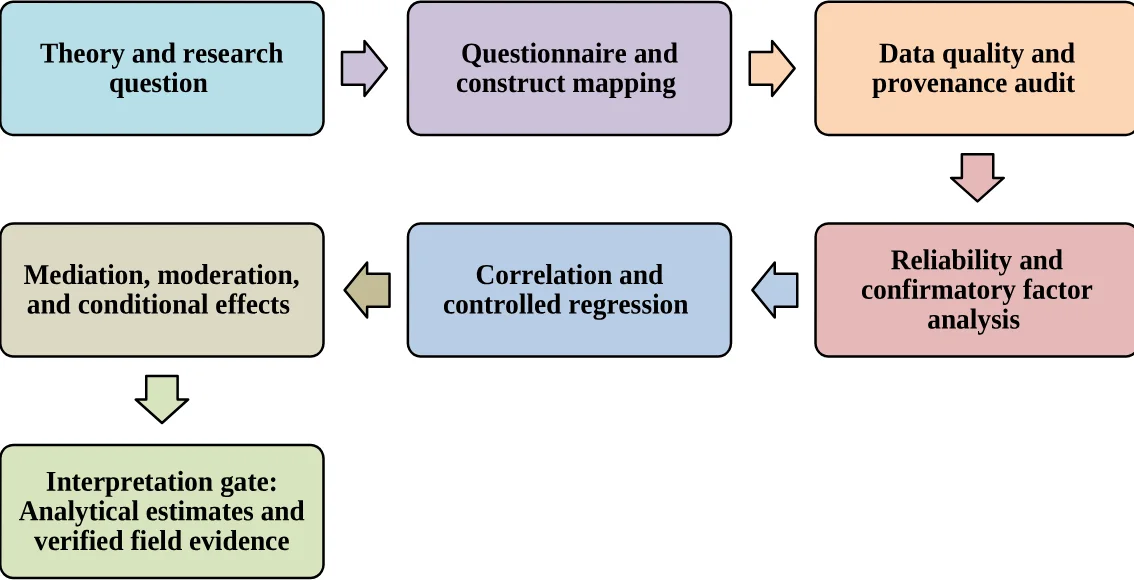
This study is an exploratory study with a cross-sectional quantitative survey design, which covers 225 records of ride-hailing drivers and food delivery riders of Chattogram Metropolitan Area. Based on a theory-driven conditional-process model, the design examines the intervening role of perceived algorithmic fairness between algorithmic management and two concurrent processes, employee voice and fair work, and the moderating effect of contestability on the first-stage process of algorithmic management fairness. Work type, job tenure, and hours of work per week are control variables. The entire research design sequence is shown in Figure 2. It starts with theory development and questionnaire mapping, then moves on to data screening and measurement validation, correlation analysis, controlled regression analysis, mediation analysis, moderation analysis, conditional indirect analysis, and concludes with evidence-based reporting, suitable for a cross-sectional design.
4.2 Study area
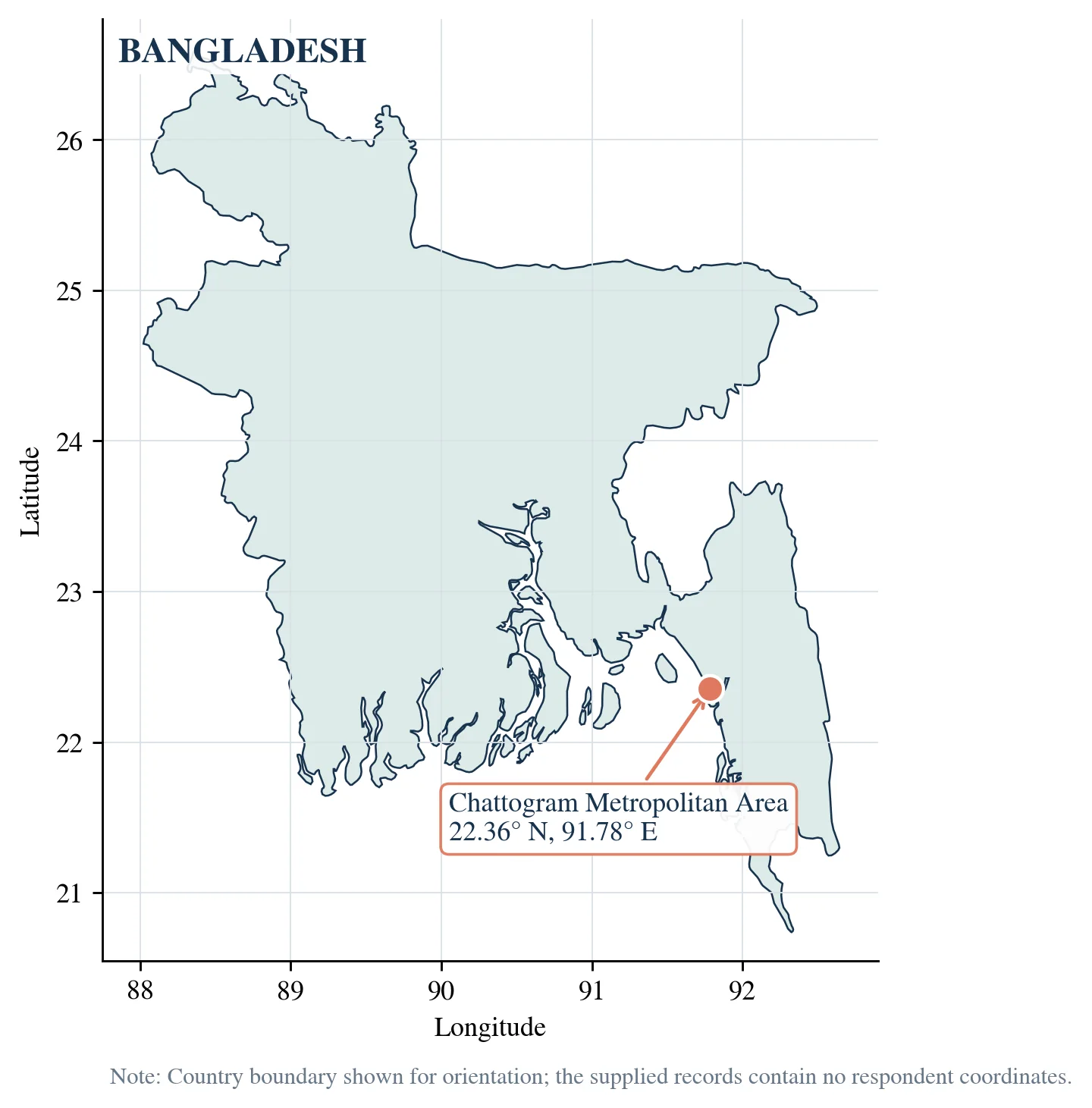
The Chattogram Metropolis in Bangladesh provides the geographical background for the study as illustrated in Figure 3. The Southeast of Bangladesh, and the metropolitan area in particular, is a significant commercial and transport hub, where app-mediated mobility and delivery work serves as a relevant context for studying automated allocation, monitoring, ratings, incentives, and appeals. The analytical orientation map is based on a public country boundary; the two defining coordinates were based on the approximate center of the study area, not on verified neighborhood-level recruitment sites or sampling coverage; the two coordinates of the marker represent the study area.
4.3 Target population and sample
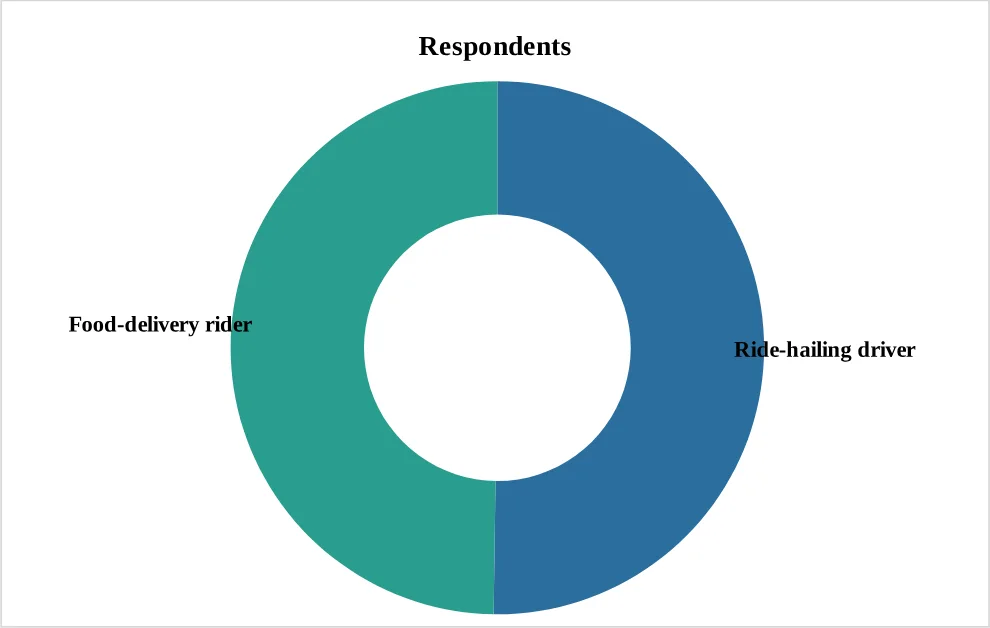
The target group includes app-based transport drivers and food delivery riders of Chattogram Metropolitan Area. There are 225 cases provided, with 113 in the ride-hailing category and approximately 112 in the food-delivery category. This size will allow for the following: multi-item reliability, a four-factor confirmatory model, and regression-based conditional-process analysis.
True to the name, a time-location or venue-assisted purposive strategy would seek to recruit workers near transport hubs, commercial areas, restaurants, and worker gathering places during several dayparts in the field. Recruitment should be done on a stratified basis according to work type and distributed in the Chattogram Metropolitan Area. Requirements should include platform experience in the metro area for 3+ months and age 18 or older. Multi-App Workers to respond on a specific platform. Refusals, duplicate prevention, interviewer training, language, and consent should be covered in the protocol.
4.4 Instrument and operationalization
The survey instrument included responses to questions regarding the following areas: demographics, algorithmic management, algorithmic fairness, contestability, employee voice, fair work, and additional experience. Algorithmic management rated automated allocation, scheduling, evaluation, monitoring, rewards, discipline, and control using a 5-point scale. Fairness evaluated equity in results, processes, explanations, respect, and fairness. Voice was judged as freedom to voice out concerns, make proposals for change, disagree, be responded to, and not be afraid to speak. Fair work was measured by six items. The contestability indicators comprised six binary measures: notice, reasons, evidence access, appeal, authorized human review, and correction. Challenge confidence was added to availability, which was rescaled to a five-point measure. Results are analysed descriptively, and non-appellants are not categorised as non-contestable in the analysis.
4.5 Data preparation and analysis
225 records were quantitative responses. The items were scored according to the item map in the workbook. Cronbach's alpha was used for the multi-item reliability. A confirmatory factor analysis was performed on algorithmic management, algorithmic fairness, employee voice, fair work, and an observed composite of contestability; the availability items were binary procedural components. There is no current guidance on choosing the fit estimator for ordinal indicators, and it is recognized that estimates are potentially affected by treating the discrete variables as continuous [35], [38]. Here, maximum likelihood covariance modeling is employed; the goodness of fit is judged by chi-square/df, CFI, TLI, RMSEA, and SRMR. Reliability and validity are assessed using composite reliability, AVE, standardized loadings, and HTMT. Reporting is based on the current SEM guidelines, but the tests conducted are regression and not PLS-SEM [36].
Standardized composite scores are used for the structural analysis. Algorithmic management, contestability, centered interaction, work type, job tenure, and weekly hours are regressed on fairness. The algorithmic management, fairness, contestability, and the same controls are then regressed separately with employee voice and fair work. Variance-inflation factors assess multicollinearity. The 5,000 bootstrap resamples are used for estimating the indirect effects. The conditional indirect effects are explored at low (-1 SD), mean, and high (+1 SD) levels of contestability, and the index of moderated mediation is presented. The method is based on the current explanations of mediation, moderation, and conditional-process analysis [34], [37].
4.6 Ethical safeguards
The data set does not include any identifiable personal information. Survey research with platform workers should nonetheless be conducted in accordance with relevant ethics approval or exemption processes, informed consent, minimizing the collection of identifying data, and access to survey data should be controlled. The particular safeguards needed for deactivation, penalties, income loss, and appeal records stem from the disclosure of those actions being made available to workers, exposing them to retaliation. The reporting should then be based on aggregated results, remove unstable small groups, and extract contact details from analytical data.
5. Results
5.1 Sample profile and data quality
All 225 records passed the range and completeness checks, and there was no quantitative response missing. As can be seen in Table 1, the largest age group was 25-34 years old with 50.2 percent of the respondents in this group. 94.7 percent of the respondents were male, and HSC was the most frequently reported educational qualification with 45.8 percent. Among the full-time workers, 69.8 percent were employed full time and 50.7 percent were between 40 and 59 hours a week. Each work type has been listed separately and not included in the table and figure to avoid double counting.
Table 1. Demographic and work-profile characteristics of the sample (N = 225)
| Characteristic | Category | n | % |
|---|---|---|---|
| Age | Under 25 | 54 | 24.0 |
| 25–34 | 113 | 50.2 | |
| 35 or older | 58 | 25.8 | |
| Gender | Male | 213 | 94.7 |
| Other gender or undisclosed | 12 | 5.3 | |
| Education | Up to SSC | 68 | 30.2 |
| HSC | 103 | 45.8 | |
| Bachelor’s or higher | 54 | 24.0 | |
| Job tenure | Less than 1 year | 50 | 22.2 |
| 1–2 years | 89 | 39.6 | |
| More than 2 years | 86 | 38.2 | |
| Monthly income | BDT 25,000 or less | 80 | 35.6 |
| BDT 25,001–35,000 | 91 | 40.4 | |
| Above BDT 35,000 | 54 | 24.0 | |
| Work status | Full-time | 157 | 69.8 |
| Part-time | 68 | 30.2 | |
| Weekly hours | Less than 40 | 79 | 35.1 |
| 40–59 | 114 | 50.7 | |
| 60 or more | 32 | 14.2 |
Figure 4 shows the breakdown of respondents by platform-work type. The sample consisted of 113 food delivery drivers and 112 food delivery riders. This nearly equal distribution provides statistical control for work category, enabling meaningful comparisons between the two groups of workers, but it does not reflect the occupational distribution of all platform workers in the Chattogram Metropolitan Area.
5.2 Descriptive patterns
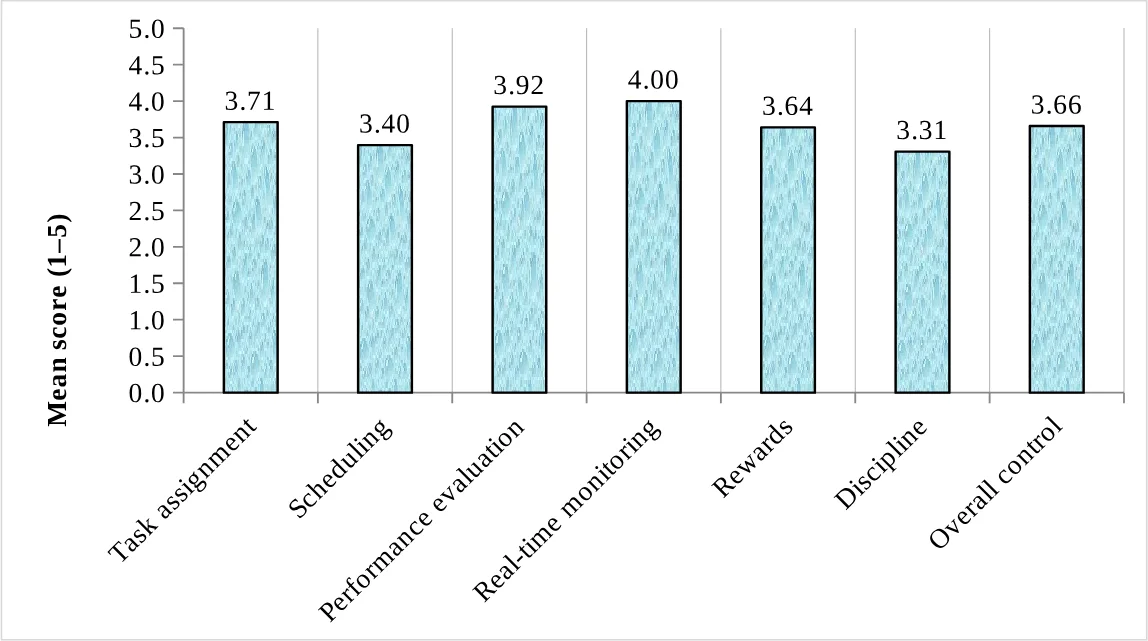
The mean scores are given for the seven items of algorithmic management in Figure 5. Automated performance evaluation and real-time monitoring were found to have the highest means at 3.92 and 4.00, respectively. The mean for automated scheduling was 3.40, and system-determined discipline had the lowest mean of 3.31. In general, the patterns show that monitoring and performance evaluation were the two most common types of digital control that respondents faced.
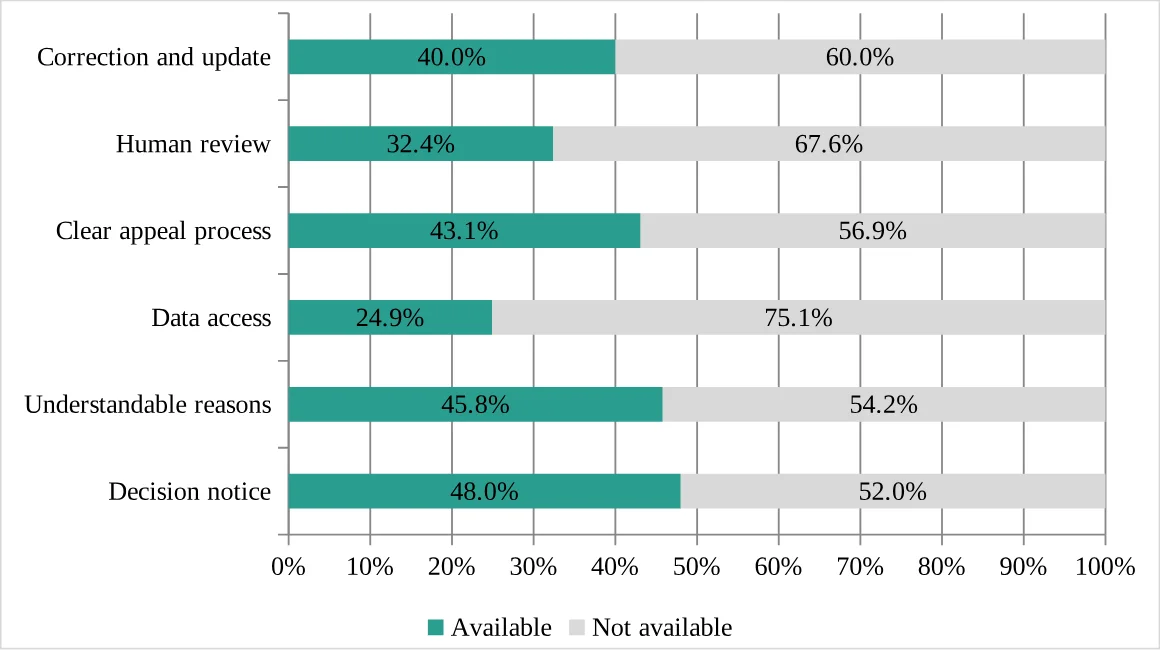
The share of six contestability mechanisms is contrasted in Figure 6. 48.0% reported that they had been notified of the decision, and 45.8% reported that they understood the reason(s). But access to the evidence used in a decision was reported by only 24.9%, and access to human review by a person with authority was reported by 32.4%. These differences demonstrate that notification or explanation alone did not guarantee meaningful access to challenge and correction.
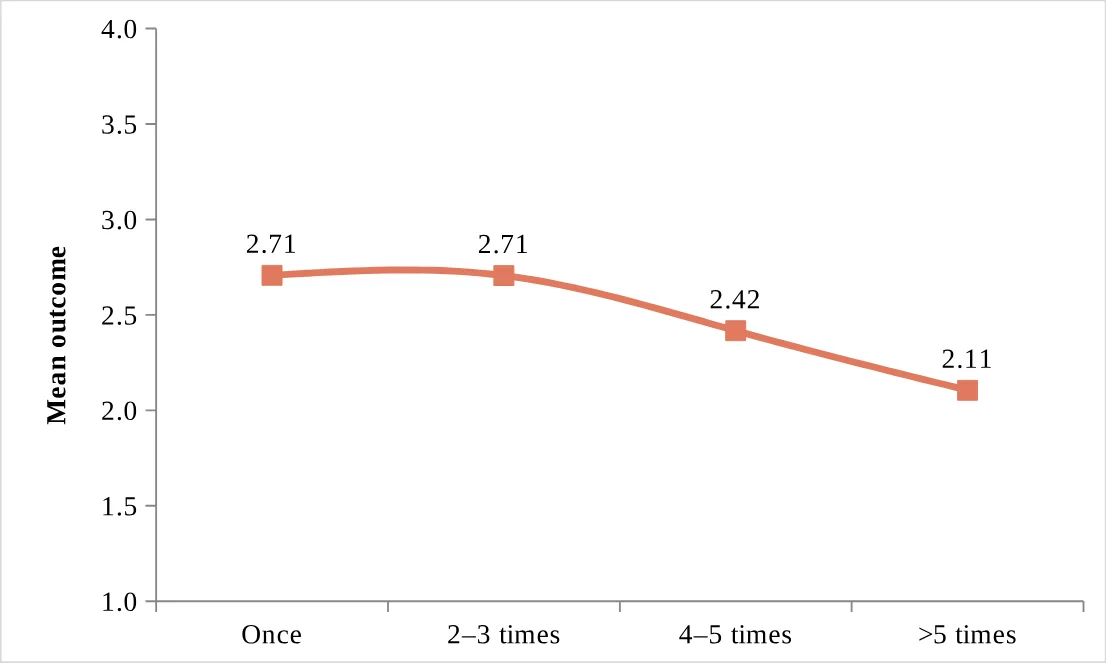
Favorable appeal outcomes by appeal-frequency category are shown in Figure 7. Among the respondents who appealed once and among those who appealed two to three times, the mean favorable-outcome score was 2.71. For four to five appeals, the mean dropped to 2.42, and for five or more, it dropped to 2.11. The cross-sectional design does not rule out causality, but the fact that respondents who made repeated appeals had less favorable outcomes suggests so.
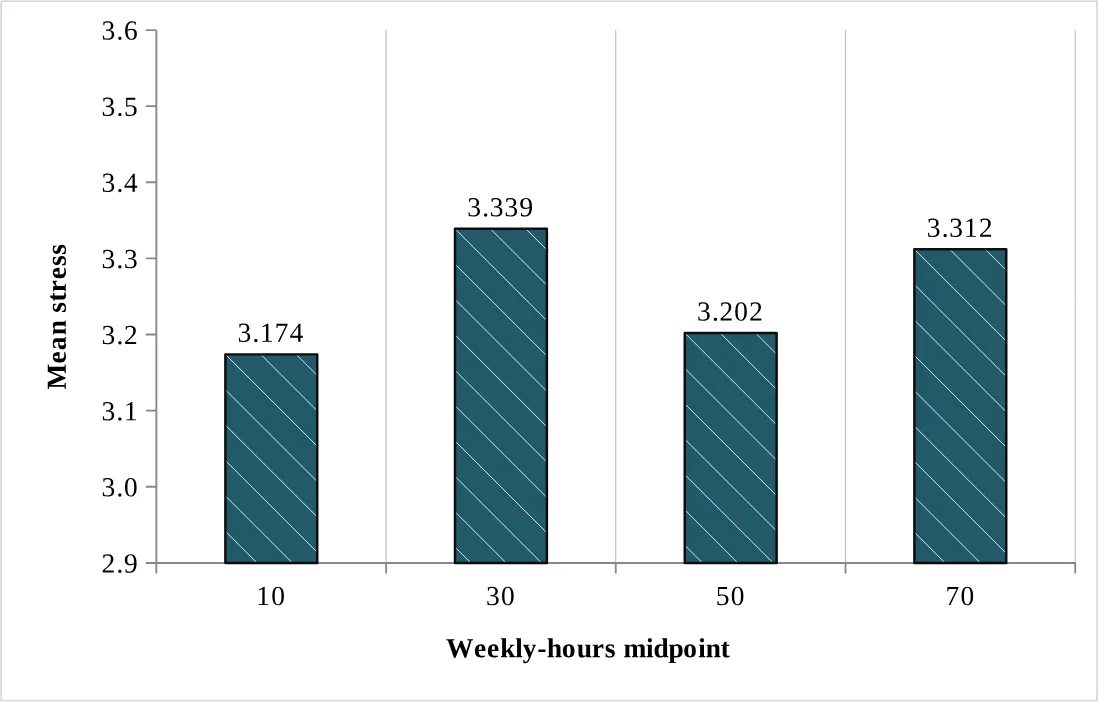
Weekly Working Hours plotted against System-related Stress, as shown in Figure 8, shows that the two variables are correlated. The weekly-hours categories had mean stress between 3.17 and 3.34 and a weak non-linear pattern. However, the limited variation suggests that the amount of weekly working hours was not sufficiently explanatory of the respondents' stress related to the system.
The composite means, standard deviations, and zero-order correlations are summarized in Table 2. The highest mean was for algorithmic management at 3.662, and contestability had a mean of 2.712. Algorithmic management was negatively correlated with algorithmic fairness at -.291, employee voice at -.189, and fair work at -.238. Algorithmic fairness, however, was positively correlated with employee voice, .401, and fair work, .579, and contestability was positively correlated with fairness, .611, and employee voice, .606.
Table 2. Composite descriptive statistics and zero-order correlations
| Construct | M | SD | 1 | 2 | 3 | 4 | 5 |
|---|---|---|---|---|---|---|---|
| 1. Algorithmic management | 3.662 | 0.888 | 1 | ||||
| 2. Algorithmic fairness | 2.864 | 0.936 | -.291*** | 1 | |||
| 3. Contestability | 2.712 | 1.141 | 0.013 | .315*** | 1 | ||
| 4. Employee voice | 2.951 | 0.963 | -0.189** | .401*** | .243*** | 1 | |
| 5. Fair work | 2.907 | 0.975 | -.238*** | .579*** | .318*** | .438*** | 1 |
5.3 Measurement model
Prior to testing the proposed relationships, scale reliability and validity were evaluated. Cronbach's alpha ranged from .766 to .886, composite reliability ranged from .846 to .889, average variance extracted ranged from .524 to .572, and standardized factor loadings ranged from .624 to .820 as presented in Table 3. The confirmatory factor analysis indicated good model fit, with a comparative fit index of .986, Tucker–Lewis index of .984, root mean square error of approximation of .026, and standardized root mean square residual of .045. Also, the maximum heterotrait monotrait correlation (.670) was favorable for discriminant validity.
Table 3. Measurement-model reliability, convergent validity, and model fit
| Construct | Cronbach’s α | CR | AVE | Loading range |
|---|---|---|---|---|
| Algorithmic management | 0.886 | 0.887 | 0.529 | 0.661–0.786 |
| Algorithmic fairness | 0.845 | 0.847 | 0.527 | 0.624–0.820 |
| Contestability availability | 0.766 | — | — | Observed composite |
| Employee voice | 0.846 | 0.846 | 0.524 | 0.689–0.762 |
| Fair work | 0.886 | 0.889 | 0.572 | 0.657–0.814 |
5.4 Direct and indirect effects
Variance-inflation factors ranged from 1.01 to 1.18, indicating no problematic multicollinearity. The models of fairness, employee voice and fair work accounted for 25.9%, 18.7% and 37.0% of their variance respectively. The results from Table 4 indicate that algorithmic management negatively predicted algorithmic fairness with a coefficient of -.271, and contestability positively predicted algorithmic fairness with a coefficient of .297. Fairness was positively predictive of employee voice (.322) and fair work (.498). Measures of employee voice and fair work were not significantly impacted by algorithmic management when fairness was added to the models. Bootstrap analysis supported indirect effects on employee voice at -.091, with a 95 percent confidence interval from -.152 to -.042, and fair work at -.142, with an interval from -.214 to -.078.
Table 4. Controlled structural paths and bootstrap indirect effects
| Path | β / effect | SE | p | 95% CI |
|---|---|---|---|---|
| AM to Algorithmic fairness | -.271 | .059 | <.001 | [-.386, -.155] |
| Contestability to Algorithmic fairness | .297 | .059 | <.001 | [.181, .413] |
| Algorithmic fairness to Employee voice | .322 | .069 | <.001 | [.187, .457] |
| Contestability to Employee voice | .136 | .065 | .037 | [.008, .264] |
| AM to Employee voice (direct) | -.096 | .064 | .136 | [-.223, .031] |
| Algorithmic fairness to Fair work | .498 | .060 | <.001 | [.379, .618] |
| Contestability to Fair work | .162 | .057 | .005 | [.049, .274] |
| AM to Fair work (direct) | -.098 | .057 | .084 | [-.210, .013] |
| AM to Fairness to Voice (indirect) | -.091 | — | — | [-.152, -.042] |
| AM to Fairness to Fair work (indirect) | -.142 | — | — | [-.214, -.078] |
5.5 Moderation and conditional indirect effects
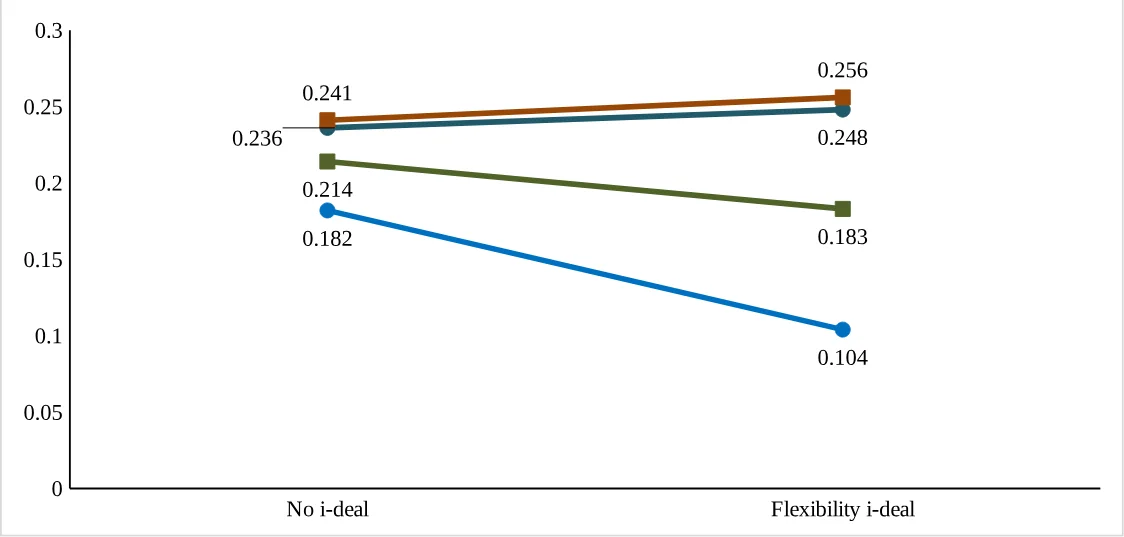
As shown in Figure 9, algorithmic management was highly positively correlated with contestability, with a standardized coefficient of .233 and a probability value of < .001. The correlation between algorithmic management and fairness was at its highest level when the contestability was low, at -0.504, and was at its lowest level when the contestability was high, at -0.038. Results show that the negative fairness implications of intensive algorithmic management were somewhat mitigated by enhanced contestability.
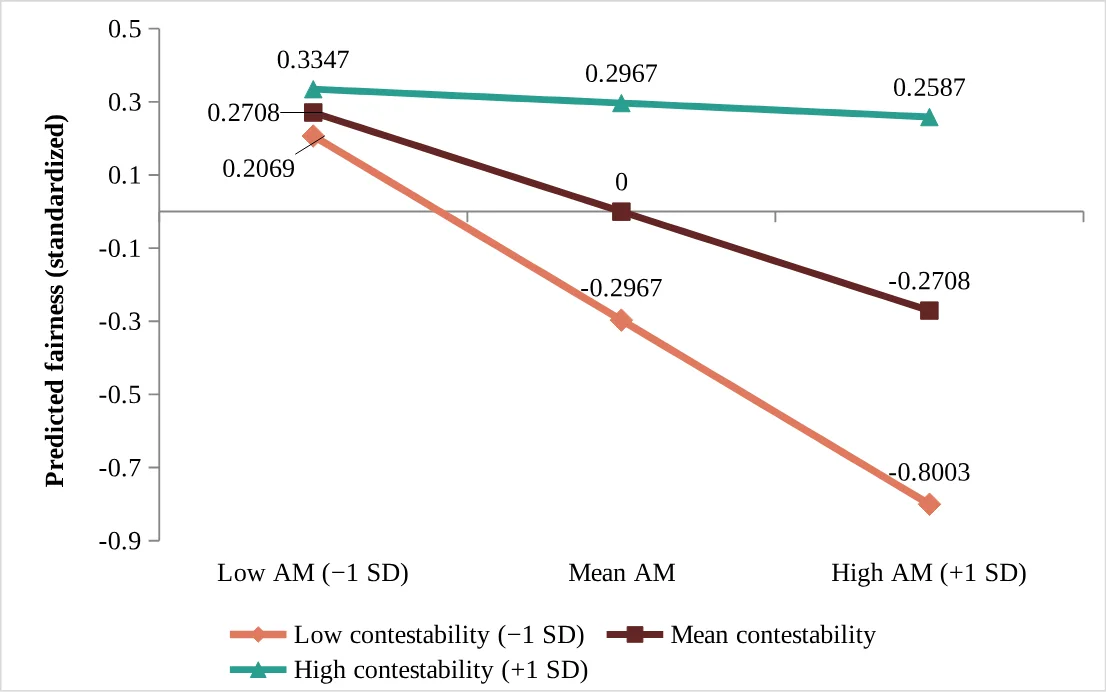
The indirect effect on employee voice was significant at low contestability at -0.161, as well as at average contestability at -0.086, but not at high contestability at -.011, as shown in Table 5. The indirect effect on fair work was similar, dropping from -0.250 at low contestability to -0.134 at average contestability and -0.018 at high contestability. All of the moderated-mediation indices were positive, and the confidence intervals did not contain zero, with the employee voice index being 0.075 and the fair work index being 0.116. The results confirm that the negative associations between algorithmic management, employee voice, and fair work, which were mediated by fairness, were weaker when the contestability was high.
Table 5. Moderation and conditional indirect effects across contestability levels
| Effect | Contestability | Estimate | Inference |
|---|---|---|---|
| AM × Contestability to Fairness | Overall | 0.233 | <.001 |
| AM to Fairness to Voice | Low (-1 SD) | -0.161 | Significant |
| AM to Fairness to Voice | Mean | -0.086 | Significant |
| AM to Fairness to Voice | High (+1 SD) | -0.011 | Not significant |
| Index of moderated mediation: Voice | — | 0.075 | Significant |
| AM to Fairness to Fair work | Low (-1 SD) | -0.250 | Significant |
| AM to Fairness to Fair work | Mean | -0.134 | Significant |
| AM to Fairness to Fair work | High (+1 SD) | -0.018 | Not significant |
| Index of moderated mediation: Fair work | — | 0.116 | Significant |
6. Discussion
The results corroborate a contestability theory of the impact of algorithmic management on employee voice and fair work. The more intensely algorithms are managed, the less fair perceived, while the more contestable they are, the fairer perceived and the less the negative relationship between digital control and perceived fairness. Fairness predicted employee voice and fair work, subsequently. Based on these findings, it seems that the workplace should consider algorithmic management on the basis of accuracy and efficiency as well as workers' capacity to question and correct the decisions. As expected, there are strong negative correlations between algorithmic management and fairness, consistent with studies that focus on the negative effects of serious information asymmetry, opaque decision rules, and limited worker agency (Kellogg et al., 2020). When workers are unable to see the evidence or rules leading to an outcome, automated allocation, monitoring, rating, incentivizing, and disciplinary processes can further intensify control. The significant interaction, however, gives the qualification. When contestability was high, the negative fairness slope approached zero, indicating that digital control was reduced less if it was meaningfully correctable. This does not justify surveillance but rather the benefit of proper surveillance and effective remedy.
The descriptive findings also delineate transparency and contestability. Access to evidence, authoritative human review, and record correction were less frequent than notification and understandable reasons. The whole system was thus better at making than at correcting decisions. When information is not linked to an organization's accountability, review, and consequences, disclosure can be non-actionable (Klenk, 2023). Contestability helps overcome this limitation by providing a chain of notification, explanation, evidence, appeal, human review, and correction.
Fairness was the mediator of the relationships between algorithmic management and outcomes. After adding fairness to the models, the direct effects of fairness on voice and fair work became non-significant, and the bootstrap indirect effects remained significant. The results indicate that workers' reactions are not simply to the existence of software but to whether algorithmic-mediated treatment and procedures are viewed as fair (Babaee & Shank, 2025). The voice and fair-work findings are of a practical nature. When workers are able to find inaccuracies, unsafe routes, unrealistic time estimates, customer misuse, and discriminatory effects, it is only when the issue gets to a reviewer that the organization benefits from the information. When a voice is meaningful, it becomes a vehicle for the individual case to become an effective organizational learning and system redesign. Likewise, fair work relies, in part, on how employees are treated as participants who are able to clarify situations and correct records that impact their dignity, autonomy, satisfaction, and commitment to work (Dasgupta et al., 2025). Finally, the conditional indirect effects were greatest at low contestability, and were not significant at high contestability. This pattern is evident and demonstrates the effectiveness of contestability as a strong procedural buffer, though it is not causal due to the cross-sectional design.
8. Conclusion
When the power of management is hidden in systems which the workers are unable to question, this becomes a fair work problem. The organizational mechanism between digital control, perceived fairness, employee voice, and fair work is contestability. Contestability is the development of the organizational mechanism between digital control, perceived fairness, employee voice, and fair work. In the data provided, the algorithms predicted less fairness; fairness was associated with voice and fair work, while contestability reduced the negative first-stage effect. The indirect effects were more pronounced when the contestability was low and were not statistically different from zero when the contestability was high. The bottom line is that an appeal button isn't enough, unless there is notice, clear reasons, access to evidence, authoritative human review, effective correction and updating of downstream records.
The results need to be interpreted considering this study's limitations and the recommendations for future research. The design is cross-sectional and common source self-reports; contestability is modeled as an observed composite; gender representation is very uneven; linear estimates may mask thresholds and event-specific effects. Future research could take advantage of the time-lagged or event-based data, integrate survey data with appeal and deactivation data, evaluate formative and hierarchical contestability measures, evaluate more inclusive samples, and explore different contestability mechanisms in organizations. The framework provides a testable rationale when the algorithm is being used as a manager, and whether there is a meaningful right for workers to challenge the algorithm.
7. Recommendations
An algorithmic-decision challenge lifecycle should be set up for, and documented, by organizations for each high-impact employment decision. Each notice should include an explanation of what happened, the rule or performance dimension that was being measured, the evidence looked at, the immediate consequence, when the response is due, and the appeal process. Explanations should be specific to allow correction, and safeguard legitimate security information.
Appeals should be easily accessible both on and off the platform, be available in relevant languages, and should be made without legal or technical expertise. Each submission should include a case identifier, maintain workers' evidence, indicate the predicted time to resolve the case, and highlight deactivation or income loss cases. It is wrong to rely on acknowledgement alone, as substantive review should be conducted. Authorized human reviewers must be able to freeze enforcement, provide context, temporarily re-enable, re-consider, and escalate persistent failure.
Any appeals that successfully are successful must address all downstream impacts such as performance scores, task allocation, eligibility for incentives, disciplinary history, access to and external reports. If there are changes, they should be explained in writing to workers and explained the reasons for the changes. Appeal Log should contain the type of appeal, the reason, evidence, reviewer, resolution time, resolution, and the corrections completed. When logs are combined, look for any common mistakes, policies that are not consistent, and the different results.
Working collaboratively to review and redesign should be the range of worker voice. Notice coverage and explanation quality, evidence availability, response time, authority of reviewers to reverse, evidence of corrections, repeat errors, evidence of no retaliation, and differences between workers should be assessed by regulators and auditors. These measures help to make algorithmic authority visible and accountable, correctable, and responsive to workers.
References
- Alacovska, A., Bucher, E., & Fieseler, C. (2025). Algorithmic Paranoia: Gig Workers’ Affective Experience of Abusive Algorithmic Management. New Technology, Work and Employment, 40(3), 421–435. https://doi.org/10.1111/ntwe.12317
- Babaee, A., & Shank, D. B. (2025). Trust and procedural justice mediate the effects of AI hiring on organizational attraction and intent to apply. Discover Artificial Intelligence, 5(1), 375. https://doi.org/10.1007/s44163-025-00633-x
- Cho, H., Cho, K., & Jung, H. (2025). Fair Treatment and Job Satisfaction: A Multilevel Analysis of Employment Transition. Behavioral Sciences, 15(11), 1524. https://doi.org/10.3390/bs15111524
- Collins, P., & Atkinson, J. (2023). Worker voice and algorithmic management in post-Brexit Britain. Transfer: European Review of Labour and Research, 29, 37–52. https://doi.org/10.1177/10242589221143068
- Curchod, C., Patriotta, G., Cohen, L., & Neysen, N. (2020). Working for an Algorithm: Power Asymmetries and Agency in Online Work Settings. Administrative Science Quarterly, 65(3), 644–676. https://doi.org/10.1177/0001839219867024
- Dasgupta, P., McDonnell, A., Carbery, R., & Jooss, S. (2025). A Systematic Review on Worker Voice in the Platform Economy: The Constitution of a Grassroots Voice Mechanism. Human Resource Management Journal, 35(3), 649–666. https://doi.org/10.1111/1748-8583.12587
- Duggan, J., Carbery, R., McDonnell, A., & Sherman, U. (2023). Algorithmic HRM control in the gig economy: The app‐worker perspective. Human Resource Management, 62(6), 883–899. https://doi.org/10.1002/hrm.22168
- Dutta, D., Mishra, S. K., & Tyagi, D. (2023). Augmented employee voice and employee engagement using artificial intelligence-enabled chatbots: A field study. The International Journal of Human Resource Management, 34(12), 2451–2480. https://doi.org/10.1080/09585192.2022.2085525
- Felix, B., Dourado, D., & Nossa, V. (2023). Algorithmic management, preferences for autonomy/security and gig-workers’ wellbeing: A matter of fit? Frontiers in Psychology, 14, 1088183. https://doi.org/10.3389/fpsyg.2023.1088183
- Fischman-Afori, O. (2025). Due process by design: Enhancing fairness and trust in AI decision-making. Social Sciences & Humanities Open, 12, 102178. https://doi.org/10.1016/j.ssaho.2025.102178
- Gagné, M., Parent-Rocheleau, X., Bujold, A., Gaudet, M.-C., & Lirio, P. (2022). How algorithmic management influences worker motivation: A self-determination theory perspective. Canadian Psychology / Psychologie Canadienne, 63(2), 247–260. https://doi.org/10.1037/cap0000324
- Galière, S. (2020). When food‐delivery platform workers consent to algorithmic management: A Foucauldian perspective. New Technology, Work and Employment, 35(3), 357–370. https://doi.org/10.1111/ntwe.12177
- Green, B. (2022). Escaping the Impossibility of Fairness: From Formal to Substantive Algorithmic Fairness. Philosophy & Technology, 35(4), 90. https://doi.org/10.1007/s13347-022-00584-6
- Horneber, D., & Laumer, S. (2023). Algorithmic Accountability. Business & Information Systems Engineering, 65(6), 723–730. https://doi.org/10.1007/s12599-023-00817-8
- Huang, H. (2023). Algorithmic management in food‐delivery platform economy in China. New Technology, Work and Employment, 38(2), 185–205. https://doi.org/10.1111/ntwe.12228
- Kellogg, K. C., Valentine, M. A., & Christin, A. (2020). Algorithms at Work: The New Contested Terrain of Control. Academy of Management Annals, 14(1), 366–410. https://doi.org/10.5465/annals.2018.0174
- Klenk, M. (2023). Algorithmic Transparency and Manipulation. Philosophy & Technology, 36(4), 79. https://doi.org/10.1007/s13347-023-00678-9
- Král, P., & Schnackenberg, A. (2024). Organizational responses to transparency determinants. Management Decision, 62(13), 309–331. https://doi.org/10.1108/MD-07-2023-1244
- Lamers, L., Meijerink, J., Jansen, G., & Boon, M. (2022). A Capability Approach to worker dignity under Algorithmic Management. Ethics and Information Technology, 24(1), 10. https://doi.org/10.1007/s10676-022-09637-y
- Lingayat, D. (2024). Digital Transformation in Management: Opportunities and Challenges: Exploring How Digital Tools Are Reshaping Management Practices Across Industries. ShodhKosh: Journal of Visual and Performing Arts, 5(2). https://doi.org/10.29121/shodhkosh.v5.i2.2024.4415
- Liu, R., & Yin, H. (2024). How Algorithmic Management Influences Gig Workers’ Job Crafting. Behavioral Sciences, 14(10), 952. https://doi.org/10.3390/bs14100952
- Mökander, J., & Floridi, L. (2022). From algorithmic accountability to digital governance. Nature Machine Intelligence, 4(6), 508–509. https://doi.org/10.1038/s42256-022-00504-5
- Muldoon, J., & Raekstad, P. (2022). Algorithmic domination in the gig economy. European Journal of Political Theory, 22, 587–607. https://doi.org/10.1177/14748851221082078
- Ochmann, J., Michels, L., Tiefenbeck, V., Maier, C., & Laumer, S. (2024). Perceived algorithmic fairness: An empirical study of transparency and anthropomorphism in algorithmic recruiting. Information Systems Journal, 34(2), 384–414. https://doi.org/10.1111/isj.12482
- Parent-Rocheleau, X., & Parker, S. (2021). Algorithms as work designers: How algorithmic management influences the design of jobs. Human Resource Management Review, 32(1), 100838. https://doi.org/10.1016/j.hrmr.2021.100838
- Solana-González, P., Vanti, A. A., García Lorenzo, M. M., & Bello Pérez, R. E. (2021). Data Mining to Assess Organizational Transparency across Technology Processes: An Approach from IT Governance and Knowledge Management. Sustainability, 13(18), 10130. https://doi.org/10.3390/su131810130
- Veen, A., Barratt, T., & Goods, C. (2020). Platform-Capital’s ‘App-etite’ for Control: A Labour Process Analysis of Food-Delivery Work in Australia. Work, Employment and Society, 34(3), 388–406. https://doi.org/10.1177/0950017019836911
- Williams, P., & Khan, M. H. (2025). Framing algorithmic management: Constructed antagonism on HR technology websites. New Technology, Work and Employment, 40(1), 102–123. https://doi.org/10.1111/ntwe.12305
- Won, J., Lee, D., & Lee, J. (2023). Understanding experiences of food-delivery-platform workers under algorithmic management using topic modeling. Technological Forecasting and Social Change, 190, 122369. https://doi.org/10.1016/j.techfore.2023.122369
- Wu, X., Liu, Q., Qu, H., & Wang, J. (2023). The effect of algorithmic management and workers’ coping behavior: An exploratory qualitative research of Chinese food-delivery platform. Tourism Management, 96, 104716. https://doi.org/10.1016/j.tourman.2022.104716
- Zhang, M., Cooke, F. L., Ahlstrom, D., & McNeil, N. (2025). The Rise of Algorithmic Management and Implications for Work and Organisations. New Technology, Work and Employment, 40. https://doi.org/10.1111/ntwe.12343
CITE THIS ARTICLE
Yeaqubi, A. M. (2026). Algorithmic Management and Fair Work: How Contestability Shapes Employee Voice under Digital Control. https://www.researchbyyeaqubi.com/article/1cb2bb7c-27c9-461e-a4b3-a9a5d8fa195a
A. M. Yeaqubi, “Algorithmic Management and Fair Work: How Contestability Shapes Employee Voice under Digital Control,” 2026. [Online]. Available: https://www.researchbyyeaqubi.com/article/1cb2bb7c-27c9-461e-a4b3-a9a5d8fa195a
Yeaqubi, A. M. (2026) ‘Algorithmic Management and Fair Work: How Contestability Shapes Employee Voice under Digital Control’. Available at: https://www.researchbyyeaqubi.com/article/1cb2bb7c-27c9-461e-a4b3-a9a5d8fa195a
Yeaqubi, Abdullah Mohammad. “Algorithmic Management and Fair Work: How Contestability Shapes Employee Voice under Digital Control.” 2026, https://www.researchbyyeaqubi.com/article/1cb2bb7c-27c9-461e-a4b3-a9a5d8fa195a.
Abdullah Mohammad Yeaqubi. “Algorithmic Management and Fair Work: How Contestability Shapes Employee Voice under Digital Control.” (2026). https://www.researchbyyeaqubi.com/article/1cb2bb7c-27c9-461e-a4b3-a9a5d8fa195a.
Yeaqubi AM. Algorithmic Management and Fair Work: How Contestability Shapes Employee Voice under Digital Control. 2026. https://www.researchbyyeaqubi.com/article/1cb2bb7c-27c9-461e-a4b3-a9a5d8fa195a
@misc{article_1cb2bb7c27c9461ea4b3a9a5d8fa195a,
  title = {Algorithmic Management and Fair Work: How Contestability Shapes Employee Voice under Digital Control},
  author = {Abdullah Mohammad Yeaqubi},
  year = {2026},
  url = {https://www.researchbyyeaqubi.com/article/1cb2bb7c-27c9-461e-a4b3-a9a5d8fa195a},
}
TY - GEN AU - Abdullah Mohammad Yeaqubi TI - Algorithmic Management and Fair Work: How Contestability Shapes Employee Voice under Digital Control PY - 2026 UR - https://www.researchbyyeaqubi.com/article/1cb2bb7c-27c9-461e-a4b3-a9a5d8fa195a ER -